Professional Hardwood Floor Refinishing
Restore and Preserve Your Hardwood
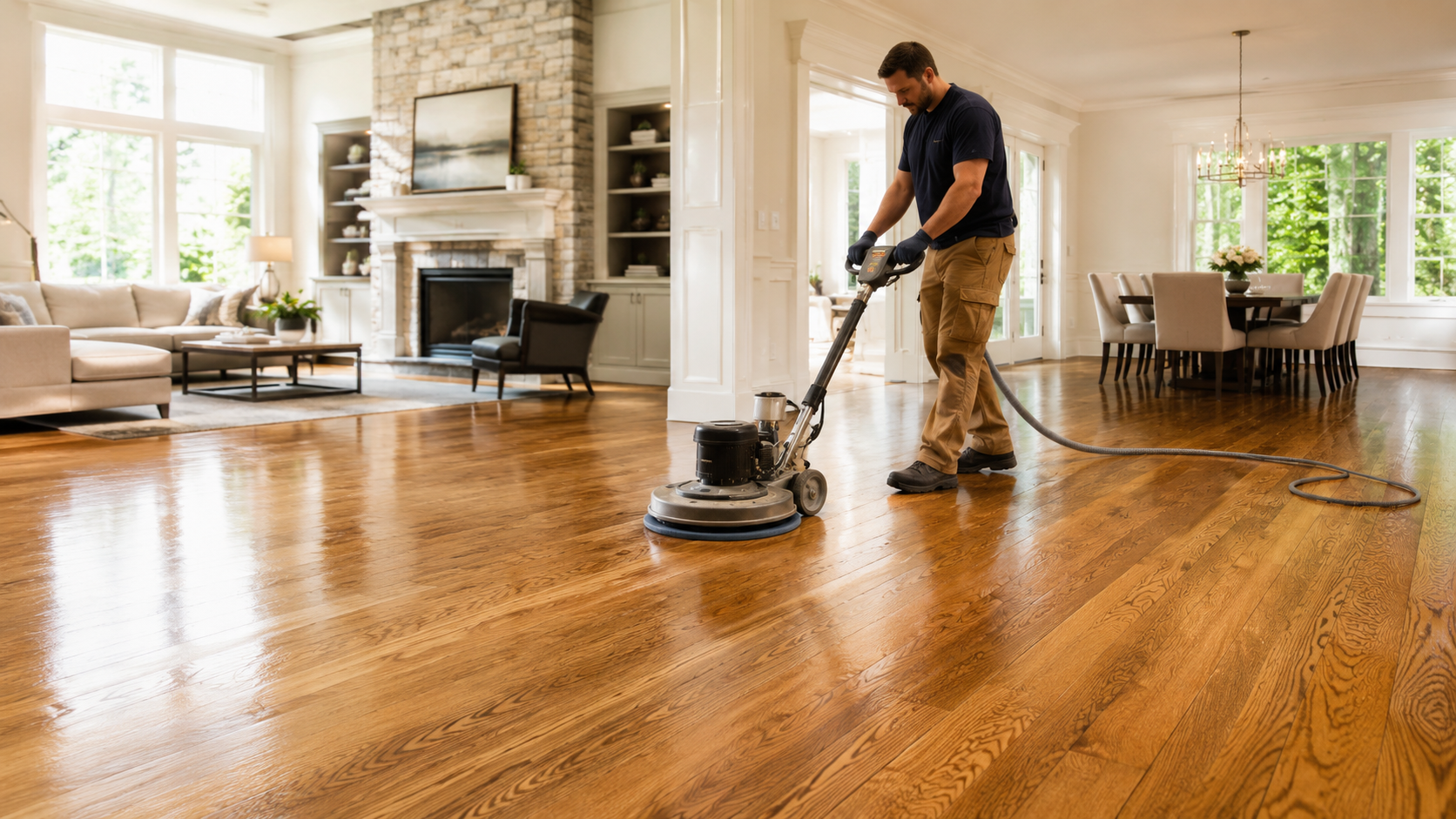
Hardwood floor refinishing restores worn, scratched, faded, stained, or outdated wood floors by removing the existing finish, correcting surface damage, developing the desired color, and applying a new protective finish system. When the flooring remains structurally sound, refinishing can preserve the original hardwood rather than replacing material that may still have decades of useful life remaining.
The objective is to restore the appearance and protection of existing hardwood, preserve as much original material as practical, and create a finished floor designed for long-term beauty, durability, and future maintenance.
Understand Floor Refinishing
Refinishing is a complete surface restoration process.
The existing finish is removed so the hardwood itself can be properly prepared, repaired where necessary, recolored when desired, and protected with a new finish system.
Unlike maintenance coating, refinishing provides access to the actual wood surface and can correct conditions that exist beneath the old finish.
Know When to Refinish
Hardwood floors gradually show the effects of traffic, furniture, pets, sunlight, cleaning, and everyday use.
Refinishing may be appropriate when the floor has:
Worn or bare areas
Deep scratches
Heavy traffic patterns
Surface staining
Faded or uneven color
Widespread finish failure
An outdated stain color
Repairs requiring surface restoration
The condition of the hardwood should determine the restoration process.
Evaluate the Existing Floor
Every hardwood floor has its own history.
Before refinishing, consider:
Wood species
Remaining thickness
Previous sanding
Existing finish
Surface damage
Repairs
Moisture conditions
Overall wear
A professional evaluation helps determine what can be preserved, what requires correction, and whether refinishing is the appropriate solution.
Preserve Original Hardwood
A worn floor is not necessarily a failed floor.
Many hardwood installations remain structurally sound long after the protective finish has deteriorated.
Professional refinishing preserves that existing material while restoring the surface homeowners actually see, walk on, and live with every day.
Refinish or Recoat
Not every worn hardwood floor needs complete sanding.
A screen and coat may be appropriate when the existing finish remains intact and the hardwood underneath is still in good condition.
Full refinishing becomes more appropriate when sanding is necessary to correct exposed wood, deeper scratches, staining, significant wear, or an unwanted color.
Check Floor Thickness
Solid hardwood can often be refinished multiple times.
Older flooring should still be evaluated to determine how much usable material remains above the tongue and groove.
Engineered hardwood requires additional evaluation because the thickness of its real hardwood wear layer varies considerably between products.
Identify the Wood Species
Different wood species respond differently to sanding, color, and finish.
Common flooring species include:
White oak
Red oak
Maple
Hickory
Ash
Walnut
Cherry
Pine
Understanding the species helps establish the appropriate restoration approach and realistic expectations for the finished appearance.
Inspect for Moisture
Moisture problems should be resolved before refinishing begins.
Warning signs can include:
Cupping
Crowning
Buckling
Dark seams
Raised boards
Unusual movement
Sanding should restore a stable hardwood floor rather than conceal an unresolved moisture condition.
Repair Before Sanding
Some floors require localized repairs before the primary sanding process.
Repairs may include:
Board replacement
Lace-in repairs
Loose board repair
Water-damage repair
Previous repair correction
Subfloor repair
Completing necessary repairs first allows replacement and existing hardwood to be prepared together.
Understand Floor Sanding
Professional sanding removes the old coating and exposes clean hardwood beneath it.
Depending on the condition of the floor, sanding can also reduce:
Surface scratches
Traffic wear
Minor staining
Finish irregularities
Repair transitions
The objective is controlled restoration without removing more hardwood than necessary.
Sanding Quality Matters
The finished appearance begins with the quality of the surface preparation.
Poor sanding can leave:
Waves
Chatter
Scratches
Edger marks
Uneven texture
Visible transitions
These imperfections often become more noticeable after color and finish are applied.
Control Sanding Dust
Modern professional sanding equipment can significantly reduce airborne dust compared with older refinishing methods.
Effective dust control improves:
Jobsite cleanliness
Surface preparation
Finish conditions
Overall project experience
Some cleanup remains part of refinishing, but proper equipment can substantially reduce disruption inside the home.
Prepare the Surface
The final sanding stages establish the surface that receives color and finish.
Consistent preparation helps create even:
Texture
Grain appearance
Color absorption
Finish appearance
Small differences in preparation can become highly visible once the floor is completed.
Develop the Color
Refinishing provides an opportunity to preserve the existing appearance or completely change the color of the hardwood.
Options may include:
Natural hardwood
Light tones
Warm colors
Medium browns
Darker colors
Custom color development
Wood species, grain, natural variation, lighting, and the surrounding interior should influence the final direction.
Test Color on the Floor
Color is best evaluated directly on the actual hardwood whenever practical.
The same stain can appear substantially different depending on wood species, sanding preparation, grain variation, lighting, and the finish applied over it.
On-floor samples provide a stronger representation of the completed floor than relying only on a printed color chart.
Consider Natural Hardwood
Refinishing does not require stain.
Natural finishing allows the grain, tone, and variation already present within the hardwood to become the primary visual feature.
For many floors, allowing the wood itself to provide the color creates a clean and timeless finished appearance.
Choose the Finish System
The finish protects the restored hardwood from everyday use.
Selection should consider:
Household traffic
Pets
Desired appearance
Drying requirements
Cleaning
Maintenance expectations
The finish system should provide the appropriate combination of appearance, protection, and long-term maintainability.
Compare Finish Types
Modern water-based finishes can provide strong durability, relatively low odor, faster drying, and a clearer appearance over the hardwood.
Traditional oil-based finishes generally create a warmer appearance and gradually amber the wood over time.
The appropriate system depends on the hardwood, desired appearance, and requirements of the project.
Choose the Sheen
Common hardwood finish sheens include:
Matte
Satin
Semi-gloss
Gloss
Sheen influences both the visual character of the floor and how readily everyday wear and surface details become noticeable.
Build the Finish System
Professional refinishing uses compatible products applied in the appropriate sequence.
The complete system provides:
Surface protection
Wear resistance
Desired appearance
Appropriate film build
Application quality is just as important as the products selected.
Allow Proper Drying
Each stage of the finish system requires appropriate drying conditions.
Temperature, humidity, airflow, product selection, and the number of coats can all influence the project schedule.
Rushing the coating process can compromise appearance and long-term performance.
Allow the Finish to Cure
A newly refinished floor may tolerate light traffic before the finish reaches full cure.
During the early curing period, restrictions may apply to:
Heavy furniture
Area rugs
Wet cleaning
Pets
Normal household use
Following the selected finish system's curing requirements helps protect the completed floor.
Restore Worn Floors
Traffic lanes commonly develop through kitchens, hallways, entryways, living areas, and other frequently traveled spaces.
Refinishing removes accumulated surface wear and rebuilds consistent protection across the hardwood.
The goal is to restore the complete surface rather than disguise only the most visibly worn areas.
Restore Scratched Floors
Many scratches can be removed or substantially reduced during refinishing.
Extremely deep scratches or gouges may require localized repair or board replacement rather than aggressive sanding across the entire floor.
The correction should match the actual depth of the damage.
Restore Faded Floors
Hardwood naturally changes color with exposure to light.
Furniture and area rugs can create noticeable differences between protected and exposed sections.
Refinishing removes the existing surface and provides an opportunity to create a more consistent appearance across the floor.
Restore Stained Floors
Some surface staining can be substantially reduced through professional sanding.
Deeper discoloration may require additional evaluation or selective board replacement.
Excessive sanding should not be used simply to chase isolated stains deeper into otherwise sound hardwood.
Restore Pet Damage
Pet-related hardwood damage can include:
Scratches
Finish wear
Dark staining
Localized board damage
Restoration may combine sanding, repairs, board replacement, color development, and a durable finish system depending on the severity of the damage.
Consider Older Floors
Older hardwood can be an excellent candidate for refinishing.
Before sanding, evaluate:
Remaining thickness
Previous refinishing
Existing repairs
Board condition
Moisture conditions
Age alone does not mean a hardwood floor needs replacement.
Consider Engineered Floors
Some engineered hardwood floors can be refinished.
The primary limitation is the thickness of the real hardwood wear layer.
The construction should be evaluated before sanding to determine whether sufficient usable material remains for safe restoration.
Plan the Refinishing Area
Hardwood can sometimes be refinished one room at a time when natural transitions provide a logical stopping point.
Connected rooms and open floor plans may require a larger refinishing area to maintain consistent:
Color
Texture
Sheen
Finish condition
The architecture of the home should help determine the appropriate project boundary.
Prepare the Home
Preparation may include:
Removing furniture
Removing area rugs
Clearing closets
Planning access
Coordinating other trades
The exact preparation depends on the size, layout, and complexity of the project.
Understand the Timeline
Refinishing time depends on several factors.
These include:
Square footage
Repairs
Existing coatings
Color development
Finish system
Drying conditions
Project complexity
The actual floor and selected finish system should determine the schedule rather than a one-size-fits-all timeline.
Understand Refinishing Cost
Hardwood floor refinishing cost depends on more than square footage.
Important factors include:
Floor condition
Repairs
Existing coatings
Color selection
Finish system
Layout
Access
Project size
The strongest estimate comes from evaluating the actual hardwood and determining the restoration it requires.
Refinish or Replace
Structurally sound hardwood should usually be evaluated for restoration before replacement.
Refinishing can preserve:
Original material
Floor continuity
Existing craftsmanship
Hardwood character
Replacement becomes more appropriate when flooring is structurally compromised, lacks sufficient remaining material, or cannot reasonably be restored.
Protect the Restored Floor
Once refinishing is complete, routine protection helps extend the life of the new finish.
Good practices include:
Furniture pads
Entry mats
Prompt spill cleanup
Proper hardwood cleaning
Indoor humidity control
Protecting the finish reduces how frequently the hardwood itself needs to be sanded.
Maintain the Finish
A refinished floor should not be ignored until bare wood appears again.
Periodic maintenance coats can renew surface protection before severe wear develops.
This allows future maintenance to preserve the restored surface rather than repeatedly returning to complete sanding.
Think Long Term
Hardwood floor refinishing is fundamentally a preservation process. When the existing flooring remains structurally sound, professional restoration can correct years of wear while retaining valuable hardwood already installed in the home.
The strongest approach is to evaluate the existing floor, correct necessary repairs and moisture problems, prepare the hardwood properly, develop the appropriate color, apply a durable finish system, and maintain that protection before severe wear returns.
Why Homeowners Choose Recoatings
Recoatings combines decades of hardwood flooring experience with professional sanding, repairs, moisture evaluation, board replacement, thoughtful color development, premium finish systems, and long-term hardwood maintenance.
Our approach focuses on preserving existing hardwood whenever practical while correcting the wear, damage, color, and finish conditions that prevent the floor from looking and performing its best.
Continue Exploring
Learn more about our company and our work:
These pages explain our hardwood floor refinishing, repair, restoration, maintenance, and installation services, showcase completed hardwood projects, and introduce the experience and craftsmanship behind Recoatings.