
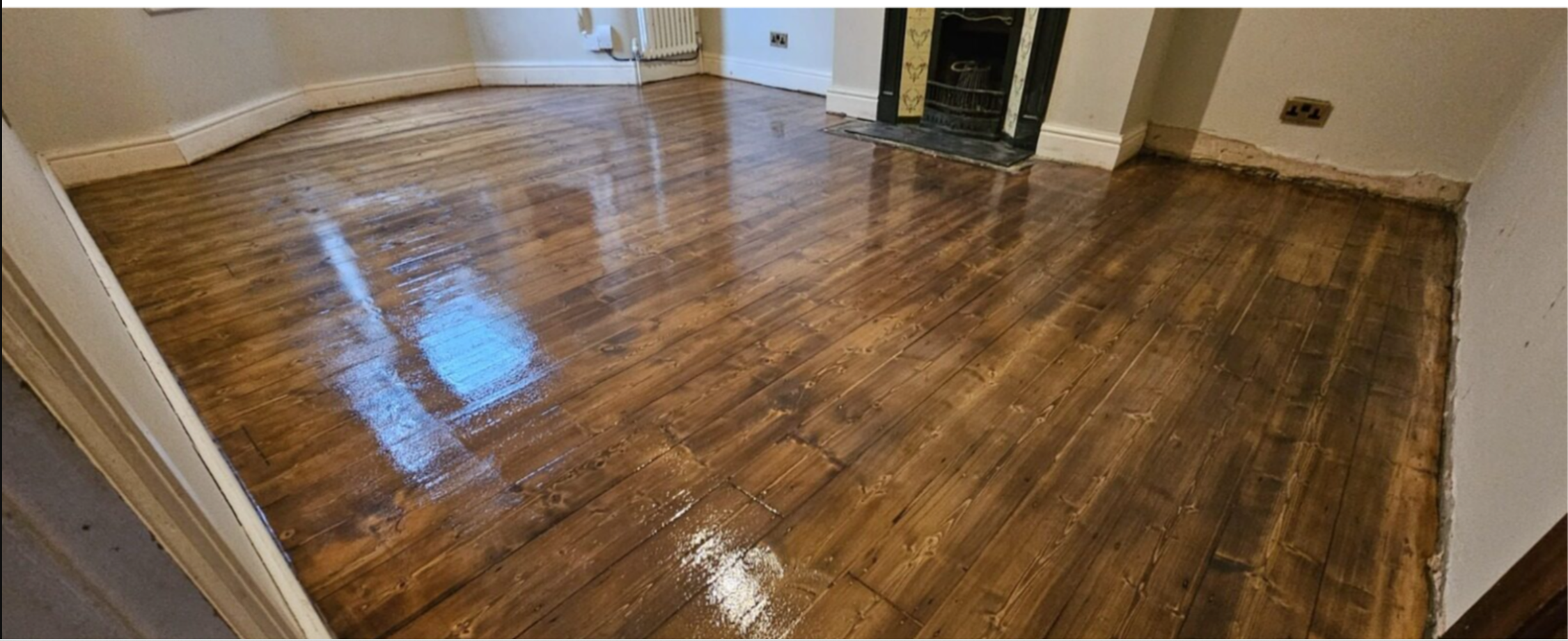
Standard / Moderate Sanding Execution
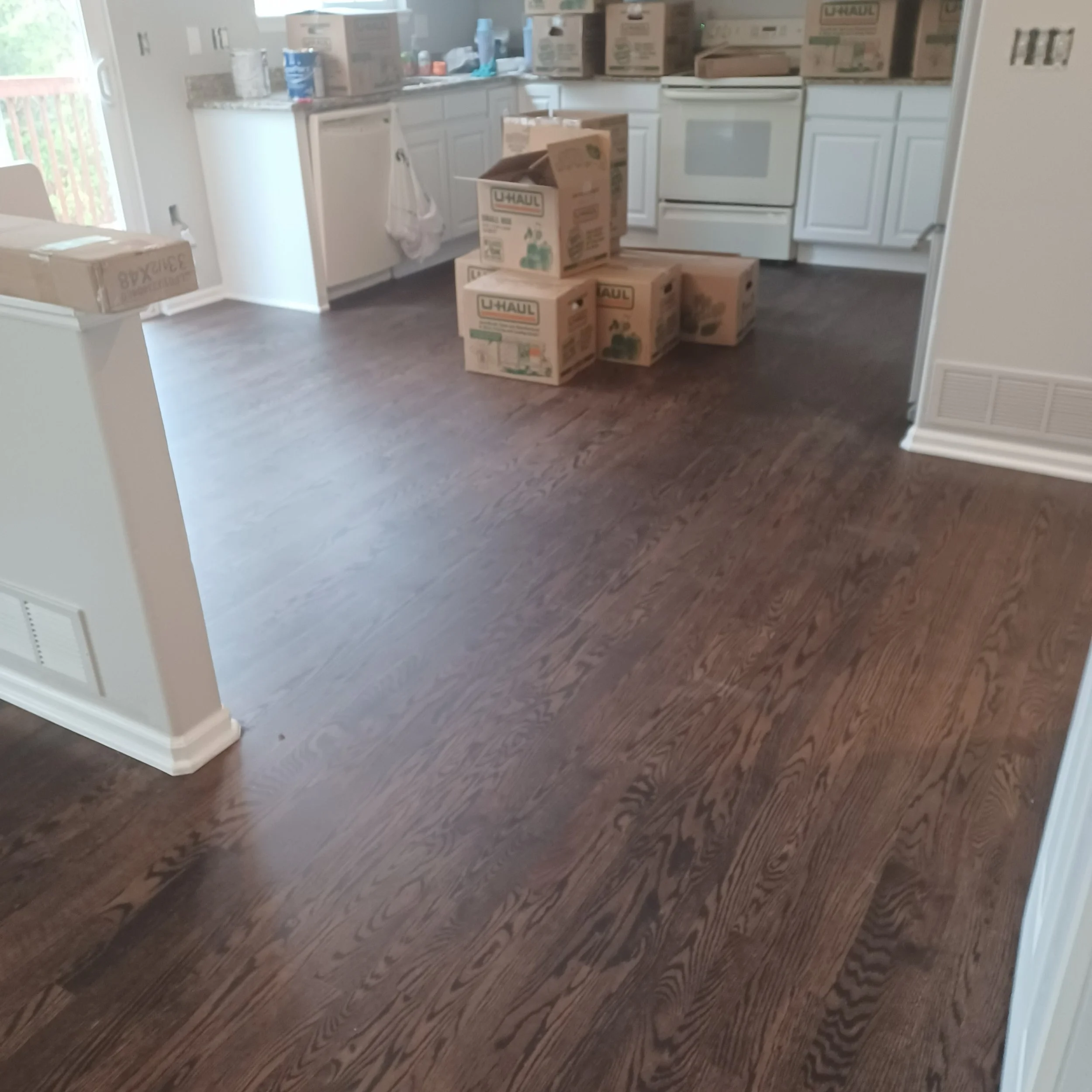
The first floors shows many of the issues commonly seen in average sanding and finishing work. The surface has inconsistent flatness, visible wave and dish-out patterns, lack of filler or properly filled, uneven stain absorption, and heavy finish reflection that exaggerates imperfections. Board edges and low spots remain visible throughout the floor, creating a patchy appearance instead of one continuous surface. The finish itself appears overly thick and uneven, reducing clarity and refinement. While functional, this level of work lacks the straightness, smoothness, and consistency associated with true high-end hardwood finishing.
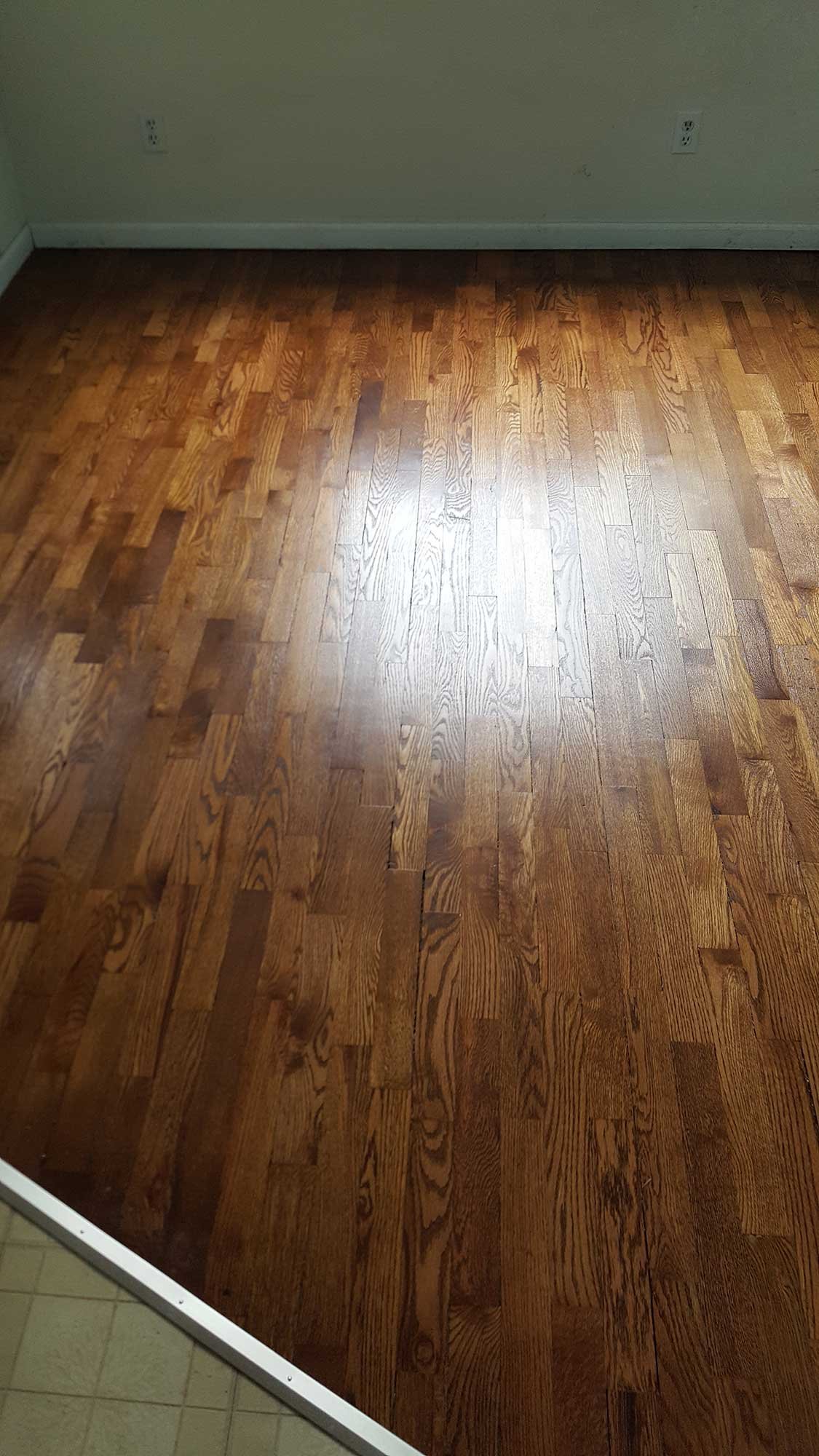
Recoatings Sanding & Finish
The second floors reflects a much higher level of preparation, sanding discipline, and finish control. The surface reads flatter, cleaner, and more continuous from wall to wall, allowing the natural grain and character of the wood to stand out evenly. Color penetration is consistent across the floor, with refined depth achieved through a controlled double-stain process. Machine marks, chatter, and transition inconsistencies have been removed through progressive sanding and detailed prep work. The matte finish further enhances realism and clarity by softening glare instead of hiding imperfections beneath heavy gloss. The result is a floor that feels architectural and seamless, rather than simply coated.
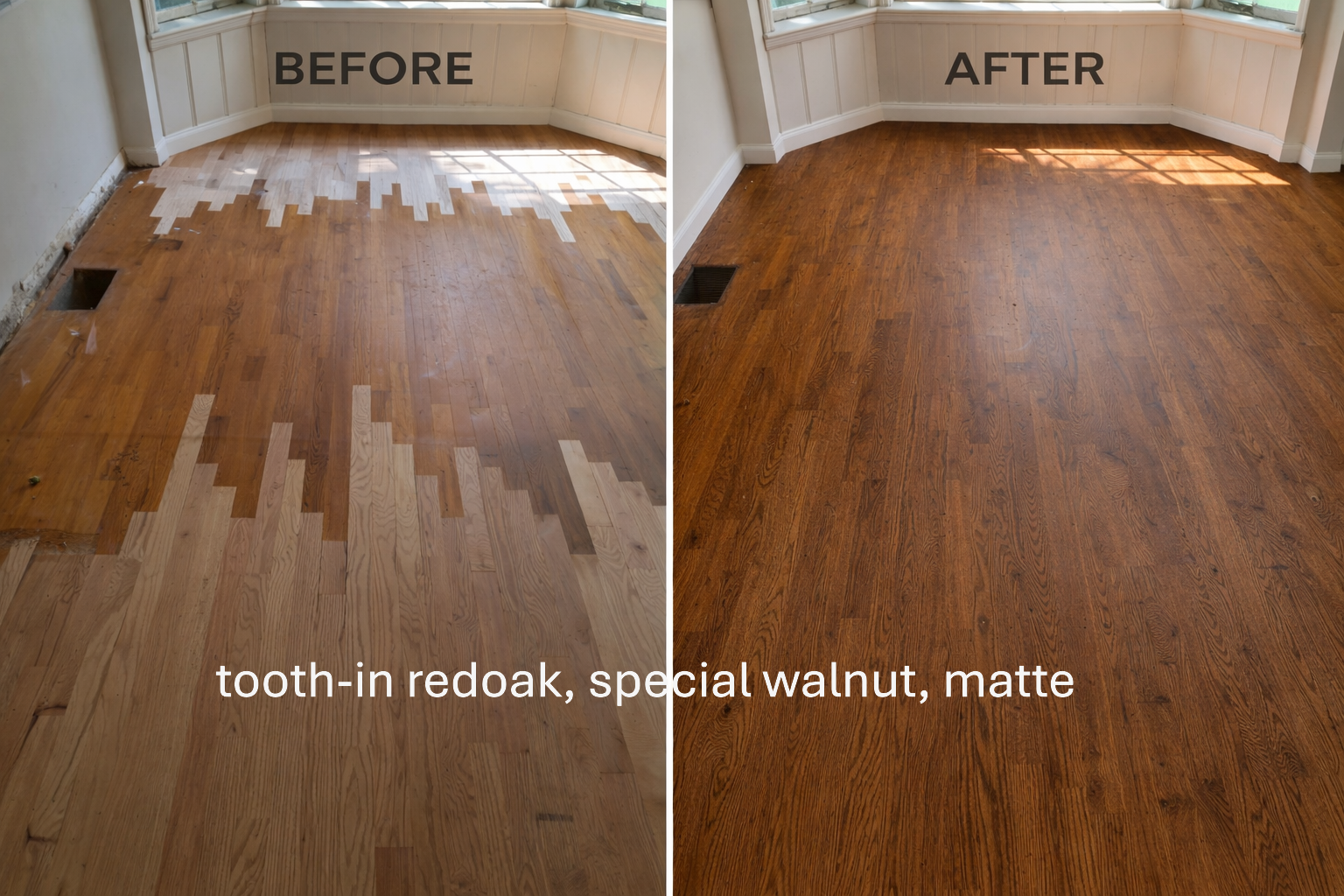
Not All Floor Refinishing Is The Same
Average sanding focuses on removing finish as quickly as possible, often setting deep machine marks into the wood to save time and reduce labor costs—all while being sold as a premium service. The result is a floor with less usable wear layer remaining and a finish system that may appear cloudy, rough, thin, or prone to yellowing over time. Recoatings approaches the process differently. Our focus is on correcting the floor itself—flattening imperfections, refining the surface, and developing rich, even color through a finish system designed for long-term clarity, durability, and service life.
Refinish
Hardwood floor refinishing is the process of sanding existing wood floors back to raw wood and rebuilding the finish system from the ground up. The goal is not simply to make old floors look new again, but to restore smoothness, clarity, color depth, and long-term durability while preserving the character of the original hardwood.
Preparation
Every refinishing project begins with preparation. All furniture, rugs, appliances, and personal belongings should be removed from the work areas prior to sanding. Where applicable, plastic containment and protective masking are installed to help isolate work zones and minimize dust migration into surrounding areas of the home. A clean, controlled workspace is an important part of achieving a consistent refinishing result.
Floor Repairs & Stabilization
Before sanding begins, the floor is carefully inspected for movement, loose boards, damaged areas, raised edges, and structural inconsistencies. Loose flooring is secured, and damaged boards may be repaired or replaced where necessary. Proper floor preparation is critical to achieving a straight, clean sanding result and a smoother finished floor underfoot.
Initial Sanding
The first stage of sanding is designed to completely remove all existing finishes, stains, surface contamination, and wear patterns from the hardwood. This process exposes fresh raw wood and creates a clean foundation for the restoration process.
At Recoatings, refinishing is approached with a restoration mindset rather than a production sanding approach. The goal is to remove only what is necessary while preserving the integrity and lifespan of the floor whenever possible. Aggressive sanding may save time, but it can also unnecessarily remove valuable hardwood and shorten the life of the floor.
Filling & Surface Refinement
Once the floor has been properly opened, a fine color-matched filler is applied throughout the floor to help tighten minor gaps, improve board transitions, and create a flatter, cleaner surface overall. Our filler system is infused with a bonding solution designed to improve penetration and further refine the floor prior to final sanding stages.
The sanding process is then progressively refined using increasingly finer abrasives, typically moving through the 60–80 grit range to further flatten, smooth, and prepare the floor. A second filler application may then be performed where needed to further repair and refine the surface before final sanding.
Final Sanding
Final sanding generally lands at 120 grit or finer depending on the species, condition, and desired finish outcome. The purpose of this stage is to remove remaining machine marks, visually straighten the grain, and leave the floor with a smooth, uniform surface ready for finishing.
Attention to detail during final sanding plays a major role in how the finished floor reflects light, feels underfoot, and carries color throughout the space. A properly refined floor creates a cleaner, quieter appearance with greater warmth and clarity throughout the home.
Stain & Finish Systems
Our standard finish system typically consists of an oil-based stain followed by a sealer coat and two coats of premium hardwood floor finish.
Finish systems can also be customized based on the desired appearance and performance requirements of the project. Options may include double staining for deeper color saturation and richer tone, or upgraded two-component commercial-grade finishes for increased durability and long-term protection.
Restoration Approach
In historically rich cities like Boulder and Denver, hardwood floors should be approached as restoration projects rather than standard new-construction sanding and finishing work. Older homes often contain floors with decades of wear, movement, repairs, character marks, and aged wood that require a more careful approach.
While it is easy to save time and money by aggressively grinding floors down to achieve a flatter surface quickly, that approach can unnecessarily remove valuable material and diminish the life of the floor. Recoatings approaches refinishing with a restoration mindset — taking the extra time to straighten, repair, and refine the floor properly while preserving as much of the original hardwood as possible.
The result is a smoother, cleaner, more natural finished floor that not only looks restored, but feels restored — preserving the character, warmth, and integrity of the home for years to come.